Free delivery* for any order above HK$ 800​

Bloomberg Business week: ESG issue

Martin Rijk sustainability

Written by Yang Yingwei; Edited by Deng Yongyun; Illustrator Chen Jiaheng​

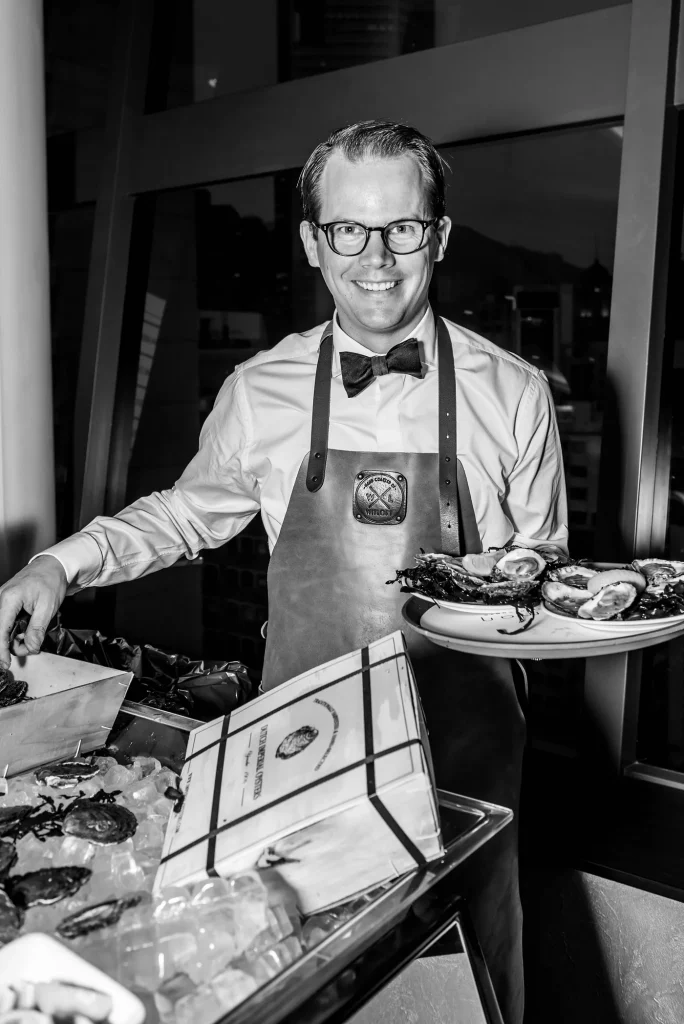
In Hong Kong, if someone tells you that they’ve switched from the real estate industry to the seafood industry, you would certainly think they’re a “crazy person”—but that’s exactly Martin Rijk’s experience.
In 2014, after leaving the real estate sector in Rotterdam, Netherlands, Martin established a seafood trading company called NaturalHolland, coming to Hong Kong with a business plan for oysters and mussels that he had prepared for half a year. Although Martin’s family business focused on real estate, and he earned a master’s degree in real estate in London, and had a five-year career as a real estate agent that helped him buy an apartment, none of this stopped him from bravely stepping out of his comfort zone.
What does “bravery” mean? Martin had visited Asia multiple times for business trips, but at that time he had only been to Hong Kong twice. Upon landing, he surprisingly chose to rent a place in Shenzhen. “At that time, I didn’t know that Shenzhen, Hong Kong, and Macau were three very different cities; I just thought Shenzhen was close to Hong Kong, and the rent was much lower.” Martin laughs as he recalls his “ignorance.” He took the ferry from Shekou in Shenzhen to Sheung Wan every day, and after a year of commuting, he decided to move to Hong Kong.
What does “adventurous” mean? Martin had no connections in Hong Kong’s seafood supply chain, so he opened Booking.com to find the ten highest-rated hotels in the city and asked the hotel general managers one by one about seafood wholesalers they frequently worked with. When a “fresh face” foreigner went knocking on the doors of various wholesalers, they found it abrupt, and some even advised him to go back to the Netherlands. “After more than six months, there were still no sales. I had savings, but in Hong Kong, you can see your money slowly trickling away like this.” Martin said this while gesturing with his hands in the air.
But Martin wasn’t just a naive kid—he was born in Yerseke, a fishing town with a population of only seven or eight thousand, which is a major source of shellfish for Belgium, consuming ten thousand tons of mussels each year. Growing up there, Martin always had classmates and friends, or their families, in the seafood industry: “I met my suppliers when I was young, and I worked part-time there while studying.”
The turning point in the story happened at a clubhouse of the Hong Kong Jockey Club. The clubhouse manager agreed to let Martin try supplying an oyster bar, on the condition that he would come every night to check the supply. For three consecutive weeks, Martin introduced oysters to members at the bar each night, ultimately winning this client. Later, more members’ clubs and high-end supermarkets in the city began placing orders. Today, Martin supplies all the casinos in Macau and some five-star hotels in Hong Kong, and his product catalog has expanded from two types of shellfish to dozens of fish, shrimp, and crab.
Not only has Martin’s business flourished, but the concept of sustainable seafood has also thrived. Recently, Martin participated in a sustainability week organized by Rabobank’s Hong Kong office, where he shared knowledge about mussels with the staff. “They tasted mussels for half an hour, and then I shared information about mussel carbon emissions, logistics, farming, and the global mussel industry,” Martin said. “I enjoy doing these presentations for businesses, allowing professionals to understand and help the seafood industry.”
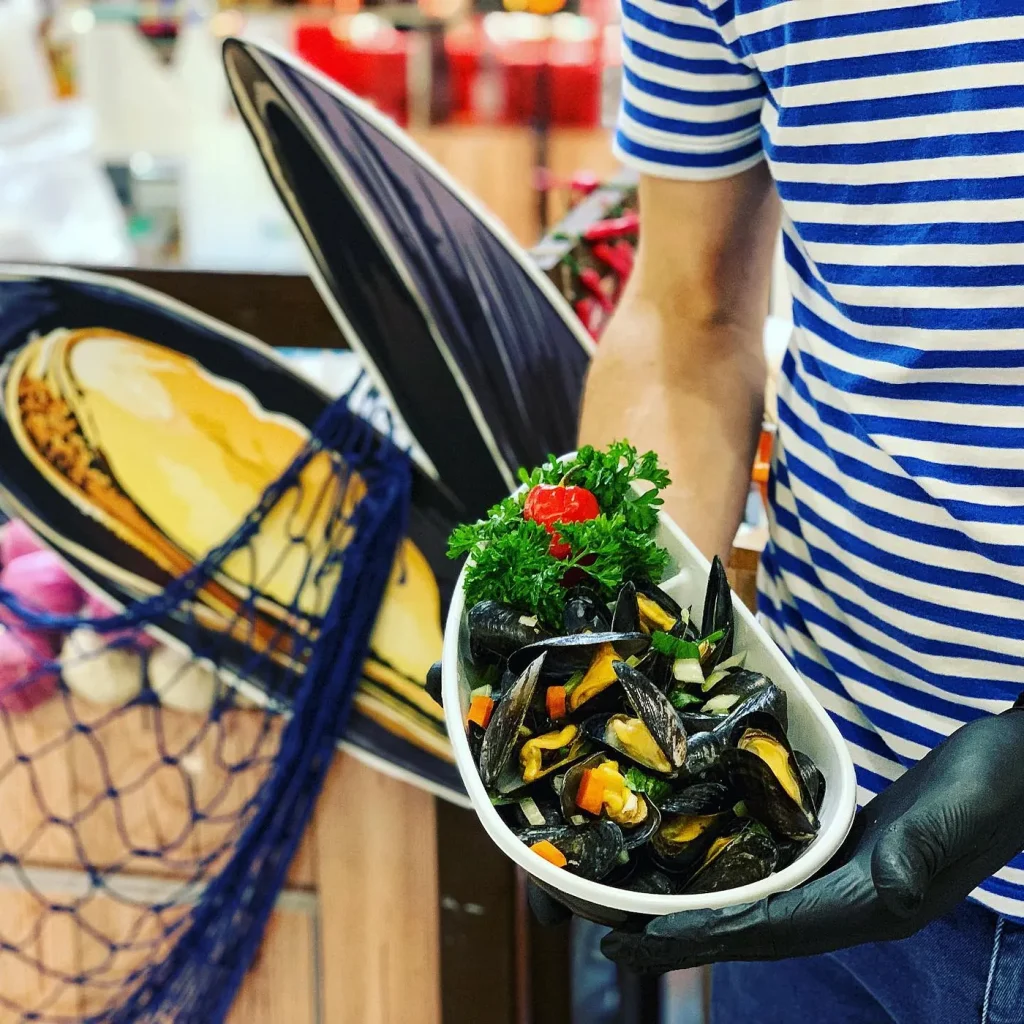
Sustainable seafood, also known as “environmentally friendly seafood,” refers to seafood produced in a way that has a minimal negative impact on local ecosystems and population sizes. Taking mussels as an example, Martin explains that the mussel farming areas in the Netherlands are regulated protected zones by the local government. Additionally, mussels feed on phytoplankton in the sea and do not require supplemental feeding. They also have water filtration capabilities, which can improve local water quality. He emphasizes that mussels are not available year-round, allowing time for mussel farms to grow and reproduce. “If farming is continuous, in the end, it’s ‘nature paying the bills.”
Seafoodfriday mussels
More importantly, purchasing environmentally friendly seafood can reduce supply chain risks and improve supply chain resilience. In Hong Kong, which ranks fifth in the world in the annual per capita seafood consumption (65.9 kg), more than 90% of seafood comes from imports. Extremely low taxes and convenient logistics have made the local seafood import industry extremely competitive, while loose regulation has made many illegal fishing people get involved.
“This is a question of trust.” Martin said that he did not realize that “stability” was the most important point in the Hong Kong catering industry, especially in high-end restaurants. He finally understood why he was “persuaded” by industry insiders at the beginning of starting a business. “Some suppliers sell goods at low prices, but disappear after half a year.” He also pointed out that the Hong Kong catering industry is “narrow”. Even if the price of its goods is not the lowest, it can attract many high-end catering customers with its quality and stable supply.
For example, when Martin wholesales seafood and contacts fisheries, he will give priority to the Marine Stewardship Council (MSC) or Aquaculture Stewardship Council, (hereinafter referred to as ASC) certified sources of goods, these two are the most recognized environmentally friendly seafood certifications in the world, respectively for fishing seafood and farmed seafood. He pointed out that these third-party certification bodies will provide guidelines for certified members to review suppliers, such as monitoring the impact of production methods on ecology, avoiding the use of antibiotics, and not using child labor, which also improves the traceability of seafood products.
“When we choose a cooperative fishing ground, the first thing is to confirm whether it has MSC or ASC certification, and then confirm the product quality.” Martin said that five-star hotels, international hotel chain brands and member clubs are the main force in purchasing such environmentally friendly seafood. “They have budgets and pressure, and need to serve members.”
Different initiatives such as “refuse shark fins”, has consumers practice the concept of “environmentally friendly seafood”. This concept needs more information, and consumption decisions are more complicated. Especially in retail, when buying fresh aquatic products in the market, the products usually only label the species, but do not list the origin and production method, which makes it more difficult for consumers to choose. Martin pointed out that unlike some European supermarkets that have begun to set procurement targets for environmentally friendly seafood, the promotion of environmentally friendly seafood in Hong Kong supermarkets is still limited to promotional activities. For example, in the “Eco-friendly Seafood Month”, supermarkets will especially promote environmentally friendly seafood products, “but after a month, sales are back to normal.”
Martin expanded his wholesale business in 2019 and built an online store platform SeafoodFriday. The platform has been certified by MSC and ASC and only sells environmentally friendly seafood. The platform adopts a reservation system. The team will purchase on the spot according to the customer’s order, and then products will arrive in Hong Kong by air to the warehouse. “We don’t need a large warehouse, which help us to reduce carbon emissions and avoid food waste.”
At first, the platform only supported English, and the main customers were Western families, but with the impact of social movements and the epidemic, many regular customers left Hong Kong. The team is translating the website into Chinese and working hard to expand into the local market. Martin’s retail business revenue accounts for about 10%, but his goal is to increase to 30%. The online store provides us with the opportunity to have direct contact with our customers, which is the best way to educate and share seafood information. Martin said, “We hope to bring the concept of environmentally friendly seafood to more people with the help of delicious seafood.”

The original full article in Chinese, can read here.